
Why Albuquerque's Outdoor Spaces Matter More Than Buyers Expect
When people begin looking for a home in Albuquerque, they usually arrive with a list for the inside: the right kitchen, enough bedrooms, a home office, storage, perhaps a particular architectural style. Then we start looking at houses.
And very often, something they hadn't put on the list becomes surprisingly important: how the home lives outside.
After more than three decades of selling homes in Albuquerque, I've learned that our outdoor spaces aren't simply an extension of the house. In many homes, they're an essential part of what makes the property work. A shaded portal where you can sit with coffee in the morning. An enclosed courtyard that feels completely private. A banco warmed by the late-afternoon sun. A kitchen that opens onto a patio built for dinner with friends. A backyard framed by the Sandias.
These spaces don't always translate neatly onto a list of square footage and amenities. But buyers feel them when they walk into them. And in Albuquerque, they can matter more than buyers initially expect.
Outdoor Living Looks Different in the High Desert
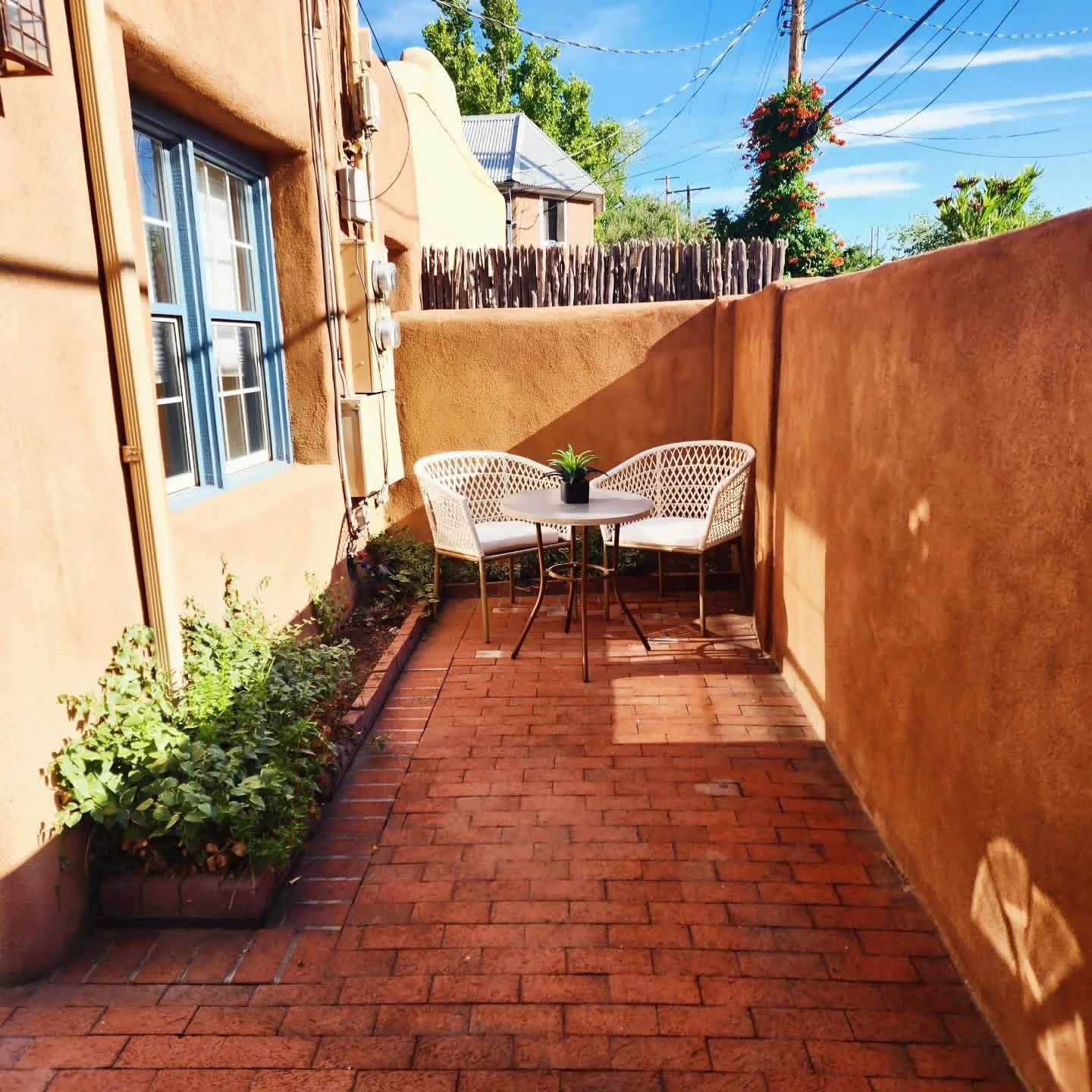
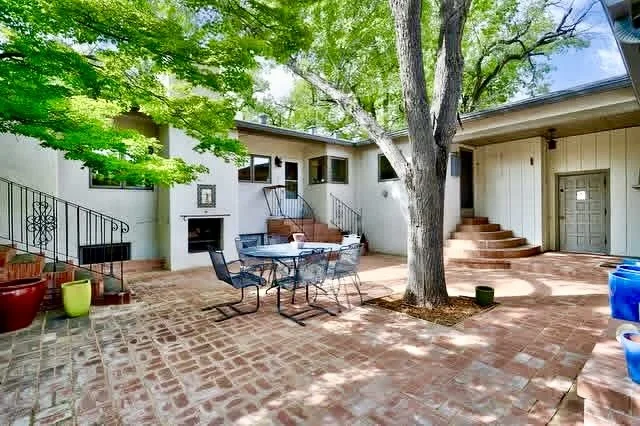
In Albuquerque homes outdoor living doesn't have a single look. In older neighborhoods, it might be an intimate courtyard surrounded by adobe walls and mature landscaping. In the North Valley, it can mean enormous cottonwoods, deep shade and a green landscape that feels worlds away from what many people imagine when they hear "New Mexico."
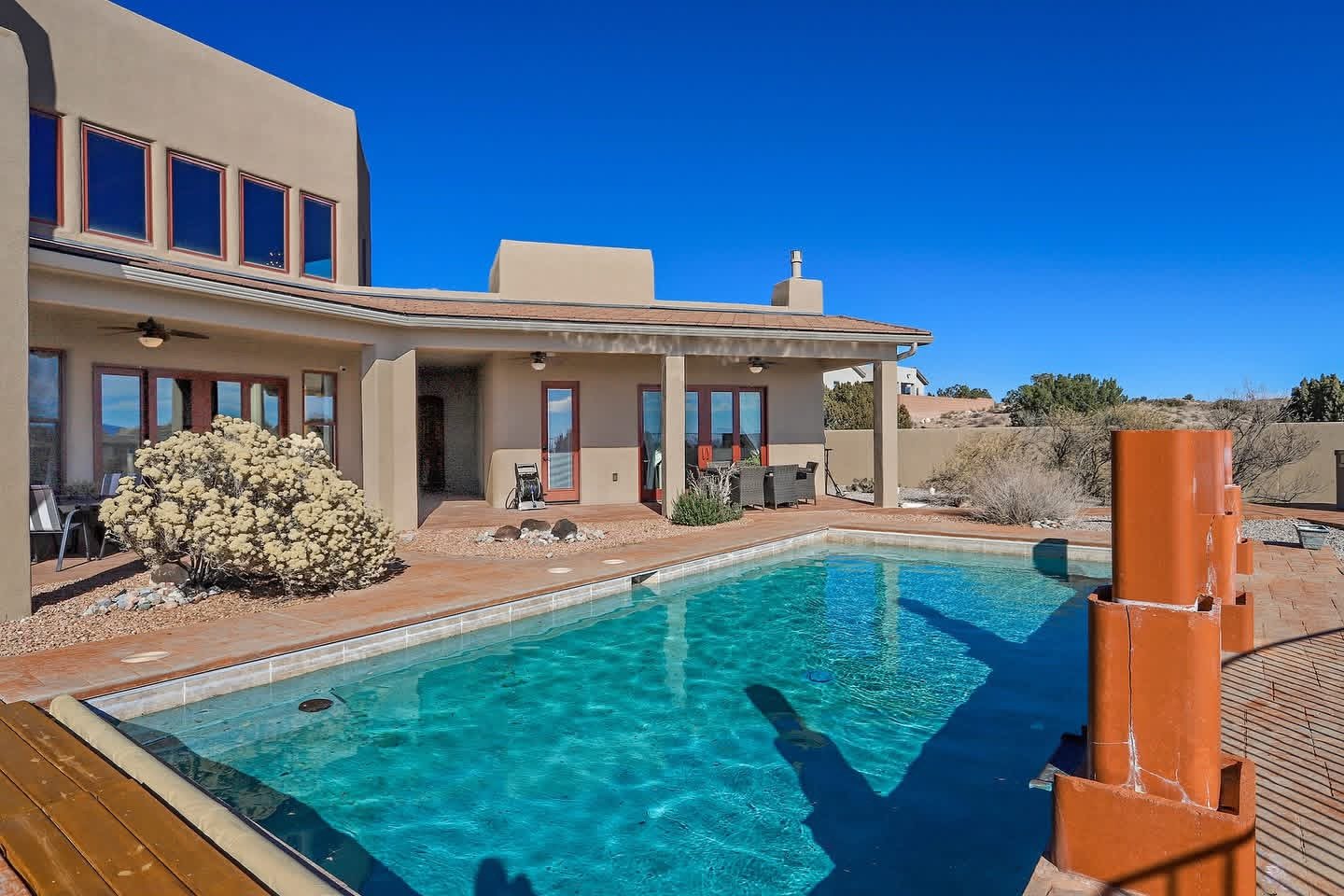
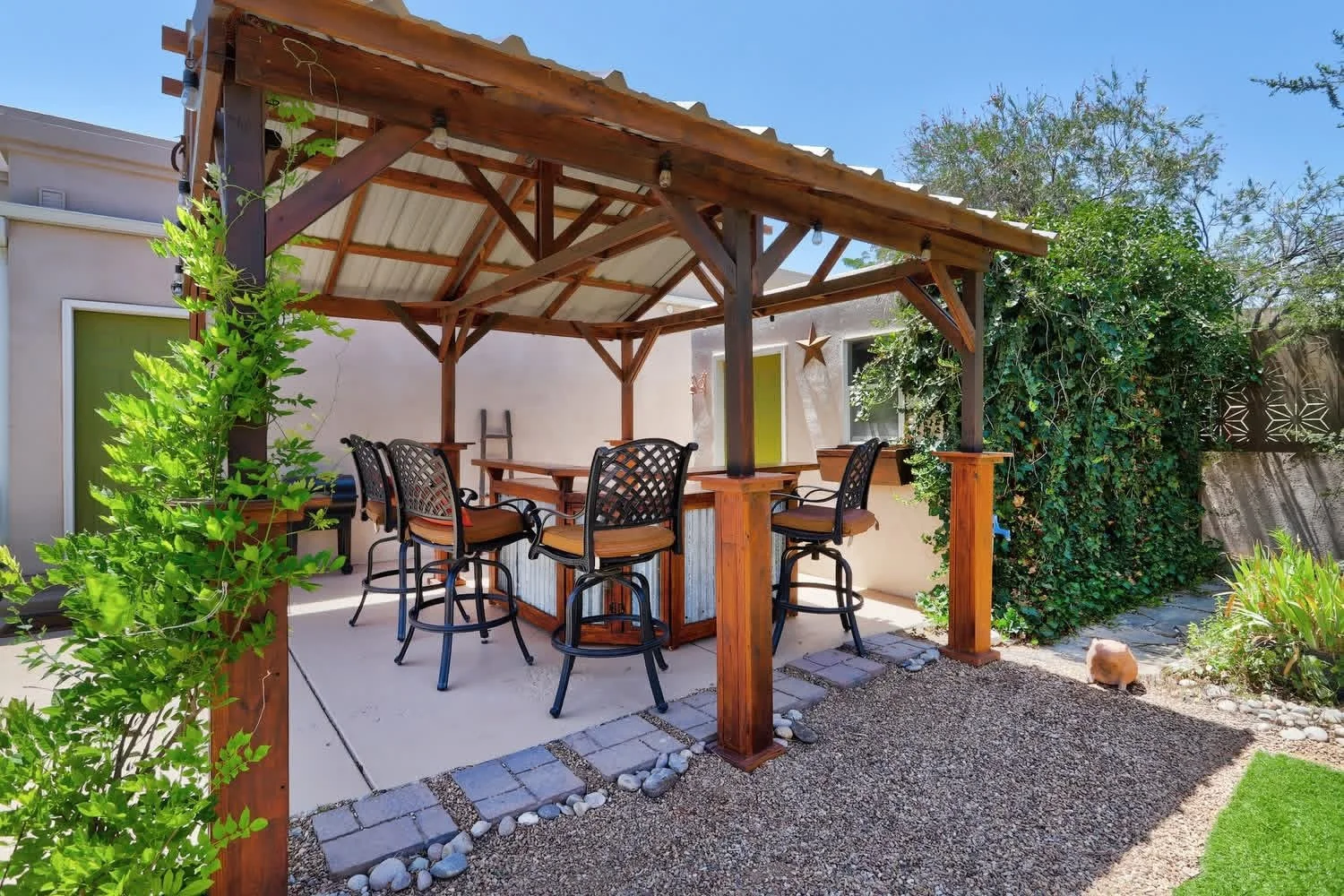
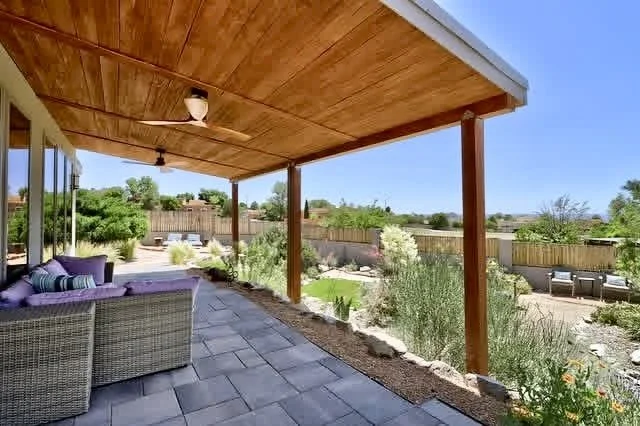
Head toward the Foothills or High Desert and the landscape changes again. The vegetation becomes more distinctly high desert, lots may open toward the Sandias, and a patio can feel as though it was designed around the view. Newer homes bring their own interpretation-covered patios, outdoor kitchens, fire features and low-maintenance landscaping designed for the way people live today. None is necessarily better than another. The question is whether the outdoor space works with the home, the site and the people who will live there.
Outdoor living in Albuquerque doesn't depend on having a large or elaborate property. Tiny courtyards can easily become someone's favorite “room,” modest patios transformed by the right shade tree, and expansive outdoor spaces designed around entertaining, pools and mountain views. What matters isn't necessarily the size of the space. It's how well it works.
People relocating to Albuquerque understandably get excited about the sunshine. People who have lived here awhile also get excited about shade. There's a difference between having a patio and having a patio you'll actually use at 5:00 on a summer afternoon.
A deep portal, pergola, mature tree or thoughtfully placed shade structure can completely change how an outdoor area functions. The orientation of the house matters, too. An outdoor space that feels wonderful in the morning can be an entirely different experience when the western sun reaches it late in the day. That's why I encourage buyers to look beyond the photograph of the patio and think about when and how they would actually use it.
Where does the sun fall in the afternoon? Is there a comfortable place to eat outside? Where would you sit in July? What about a sunny January afternoon? Is there protection from the wind? Does the house itself create shade? These aren't necessarily things that show up in an appraisal or on an MLS feature sheet, but they can make a tremendous difference in daily life.
High-Desert Landscaping Can Still Feel Lush
Sometimes the Most Valuable Feature Is Shade
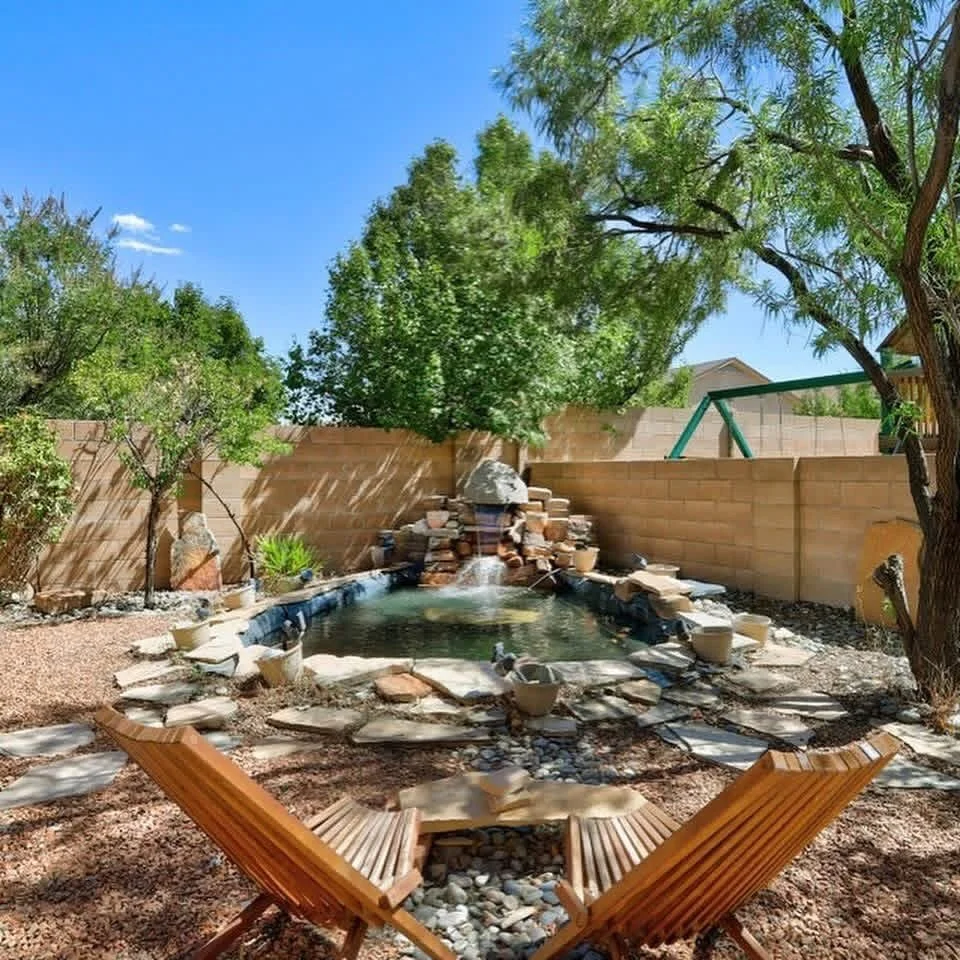
One misconception is that water-wise landscaping has to feel stark. It doesn't. Good xeriscaping can have texture, movement, seasonal color and plenty of life. Native and climate-appropriate plants, ornamental grasses, flowering perennials, desert accents, shrubs and trees can create a landscape that feels intentional while requiring less water than a traditional lawn. Bernalillo County actively encourages landscapes designed for our arid climate and currently offers incentives for qualifying turf-to-xeriscape conversions. The important distinction is between low-maintenance landscaping and no landscaping at all. Buyers notice that difference.
A thoughtfully landscaped high-desert yard can complement the architecture, soften hard surfaces, provide shade and create distinct outdoor spaces without pretending we're living somewhere with a completely different climate.
Then There Are the Views
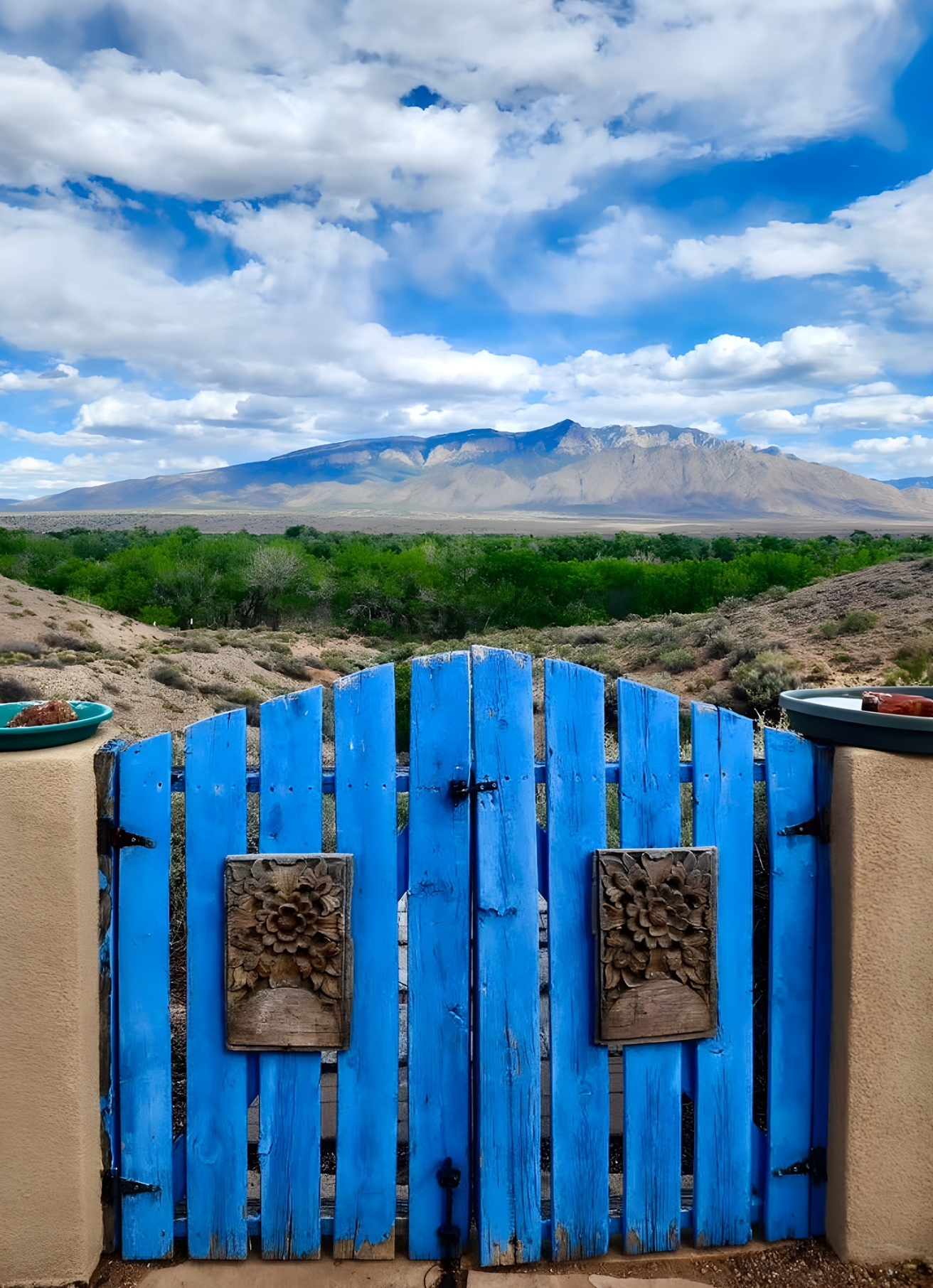
Views are another feature buyers sometimes underestimate until they're standing in front of one. In Albuquerque, that can mean the Sandias changing color in the evening, city lights from a hillside property, the bosque canopy, an expansive western sunset or simply a beautifully framed glimpse of the mountains through a courtyard opening. I've walked into plenty of homes where everyone heads directly to the window.
A great view creates an emotional response, but there's also a practical question for buyers and sellers to consider: Has the home been designed to take advantage of it? The best outdoor spaces don't merely have a view. They frame it. A patio positioned in the right place, a wall that provides privacy without blocking the mountains, landscaping that draws your eye outward, or even the placement of a dining table can change the experience completely. Sometimes relatively small changes can help a home make much better use of something that was there all along.
Albuquerque Has Its Own Outdoor Architecture
Portals create transition between indoors and out while providing valuable shade.
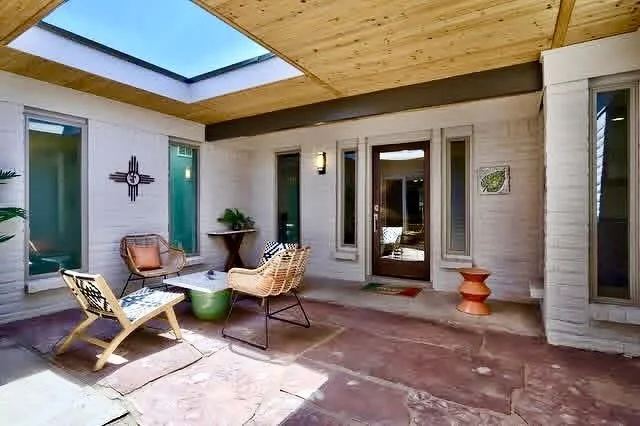
Courtyards offer privacy and shelter and have deep roots in Southwestern architecture.
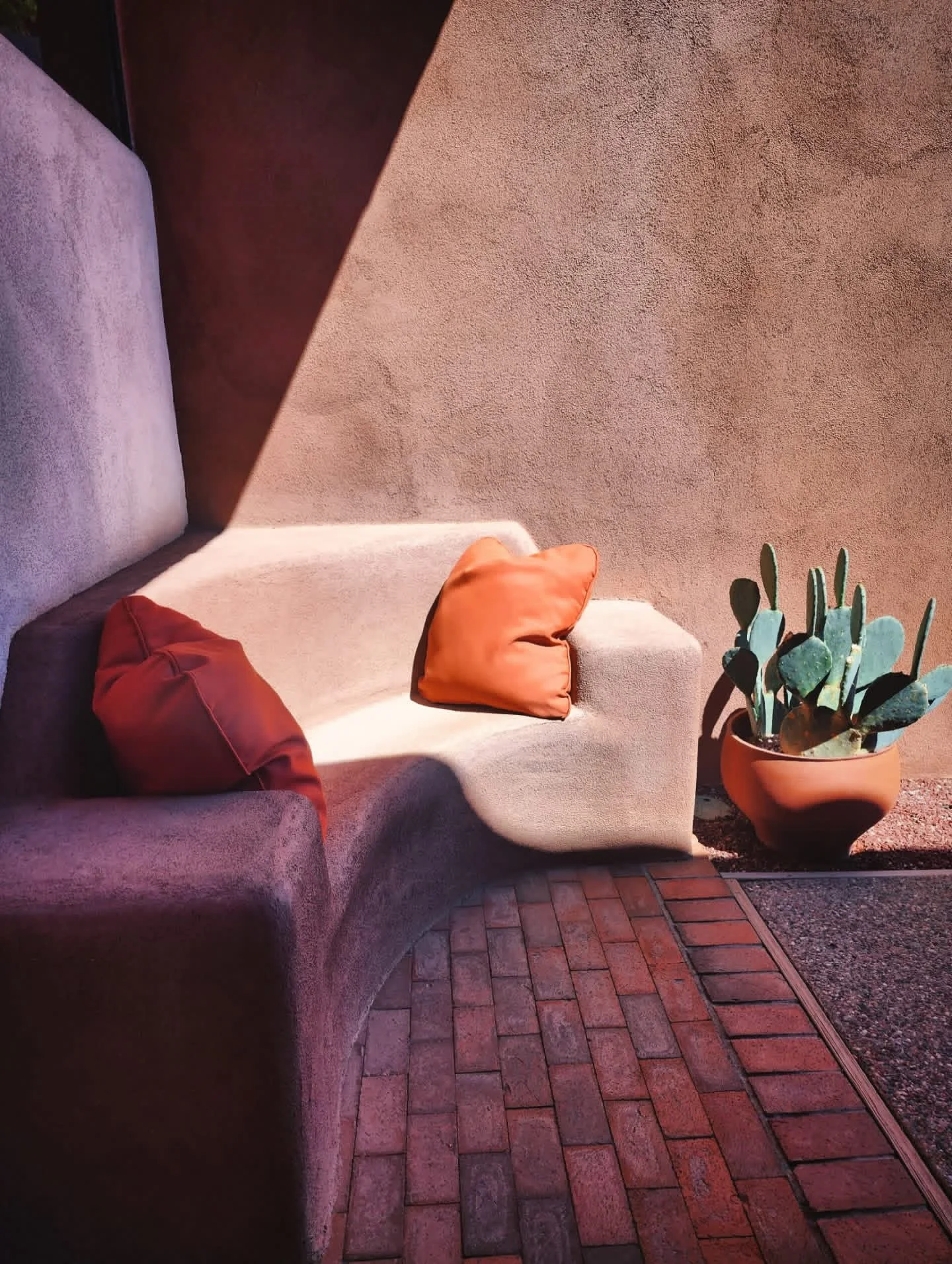
Bancos, the built-in benches traditionally incorporated into adobe walls, can turn an ordinary wall into seating and gathering space.
Kiva fireplaces and outdoor fireplaces extend the season and give a patio a focal point.
These aren't just decorative Southwestern details. At their best, they're functional responses to climate, light and the way homes in this part of the country have been lived in for generations. A well-designed outdoor space often feels less like a backyard and more like another room. Just without four walls.
Outdoor Kitchens Have Changed the Conversation
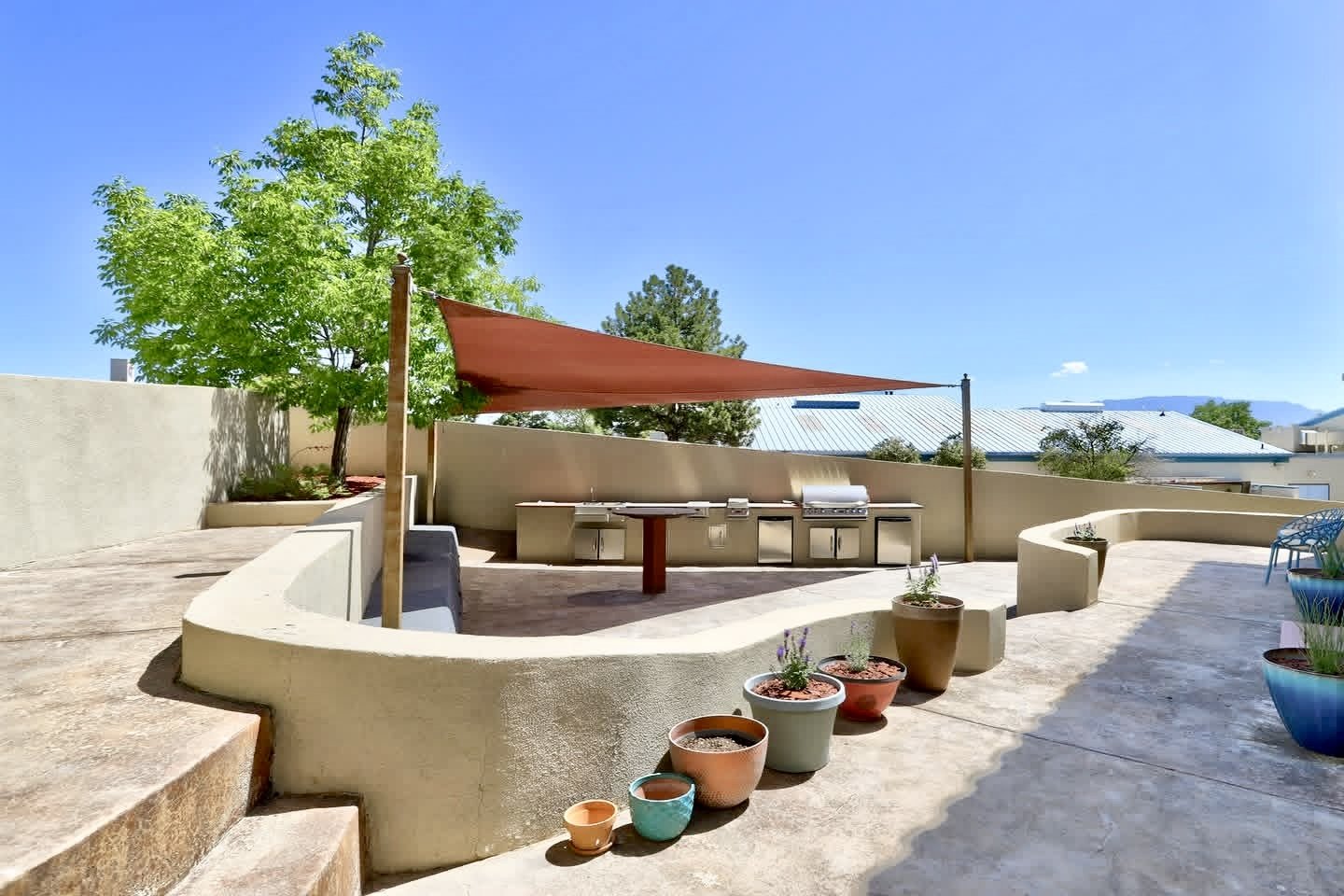
Years ago, a grill on the patio was often enough. Today many outdoor spaces have been planned much more intentionally for entertaining: built-in grills, counters, sinks, refrigerators, fireplaces, televisions, large dining areas and multiple seating zones. But bigger isn't automatically better.
The outdoor kitchens and entertaining areas that work best feel connected to the indoor kitchen and living spaces. You can imagine carrying dinner outside, having people move easily between spaces and actually using the area rather than admiring it through the window. That's something buyers respond to. The sense that a space isn't simply impressive, but livable.
And Then There’s Valley Living
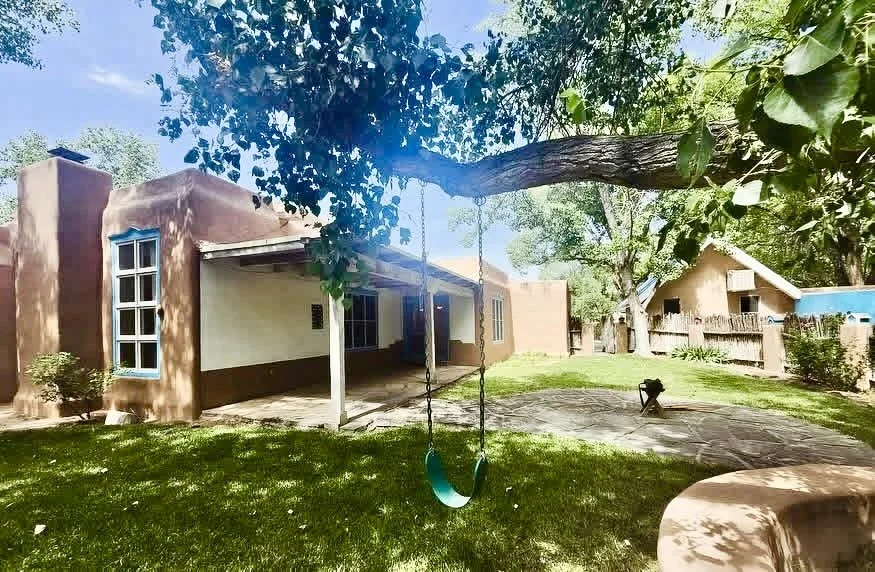
The North & South Valley and Corrales deserve a separate mention because outdoor living there can feel completely different. Mature trees, irrigated properties, larger lots, gardens and established landscapes can create an almost hidden quality. Some properties feel less like typical city lots and more like private retreats. That mature landscaping is difficult to reproduce quickly. A large tree represents years-sometimes generations-of growth.
For buyers drawn to the Valley lifestyle, the landscape may be every bit as important as the house. Of course, mature grounds also come with questions: irrigation, wells on some properties, tree maintenance, drainage and the amount of work a buyer actually wants to take on. Beautiful outdoor space still has to fit the person who is going to care for it.
What Sellers Should Pay Attention To
Outdoor areas can become an afterthought when preparing a home for sale because so much attention goes toward kitchens, bathrooms, flooring and paint. That’s often a mistake in Albuquerque. Before listing, I look at an outdoor space the same way as a room inside the house.
Does it have a purpose? Is the best seating area obvious? Are we taking advantage of the view?
Would removing or trimming something make the space feel larger? Does the landscaping complement the home? Is there enough shade to make the space inviting?
Could a buyer walk outside and immediately picture having friends over? Or spending a quiet Sunday morning there?
You don't necessarily need an elaborate outdoor renovation before selling. Sometimes the most effective improvements are much simpler: cleaning up landscaping, repairing deferred maintenance, defining a seating area, adding attractive pots or plants, refreshing cushions, clearing sightlines and making sure buyers understand how the space can be used. The goal isn't to decorate a patio. It's to help buyers see another part of the life the property offers.
Look Beyond the Square Footage
One of the things that continues to interest me about real estate after all these years is how often the part of a home someone falls in love with isn't the thing they originally came looking for. In Albuquerque, that happens outside all the time.
It's the courtyard no one expected. The cottonwood shading the backyard.
The portal where everyone ends up sitting. The first glimpse of the Sandias from the patio.
Or the little protected corner that catches the winter sun just right.
Our climate, landscape and architecture give us opportunities to live outdoors in ways that are distinctly New Mexican. When an outdoor space has been thoughtfully designed around those things, it becomes much more than a yard. It becomes part of the home.